When it comes to maintaining your trusty pocket knife, you might wonder if WD-40 is a safe and effective solution. This comprehensive guide will explore everything you need to know about using WD-40 on your knife, including its benefits, potential risks, and proper application techniques. Whether you’re dealing with a rusty old timer or maintaining your custom pocket knife, this article will help you make informed decisions about knife care.
Is WD-40 Safe for Knife Blades?
WD-40 is a multi-use product that can be used on knives, but it’s essential to understand its limitations. While it can help with rust removal and temporary lubrication, it’s not the ideal long-term solution for knife maintenance. The solvent-based formula can effectively displace moisture and protect the metal temporarily, but it doesn’t provide lasting protection like dedicated knife oils.
The Benefits of Using WD-40 on Your Knife
When used properly, WD-40 offers several advantages for knife maintenance:
- Effectively removes rust and corrosion
- Helps loosen stuck pivot points
- Displaces moisture from the blade and internal components
- Provides temporary protection against rust
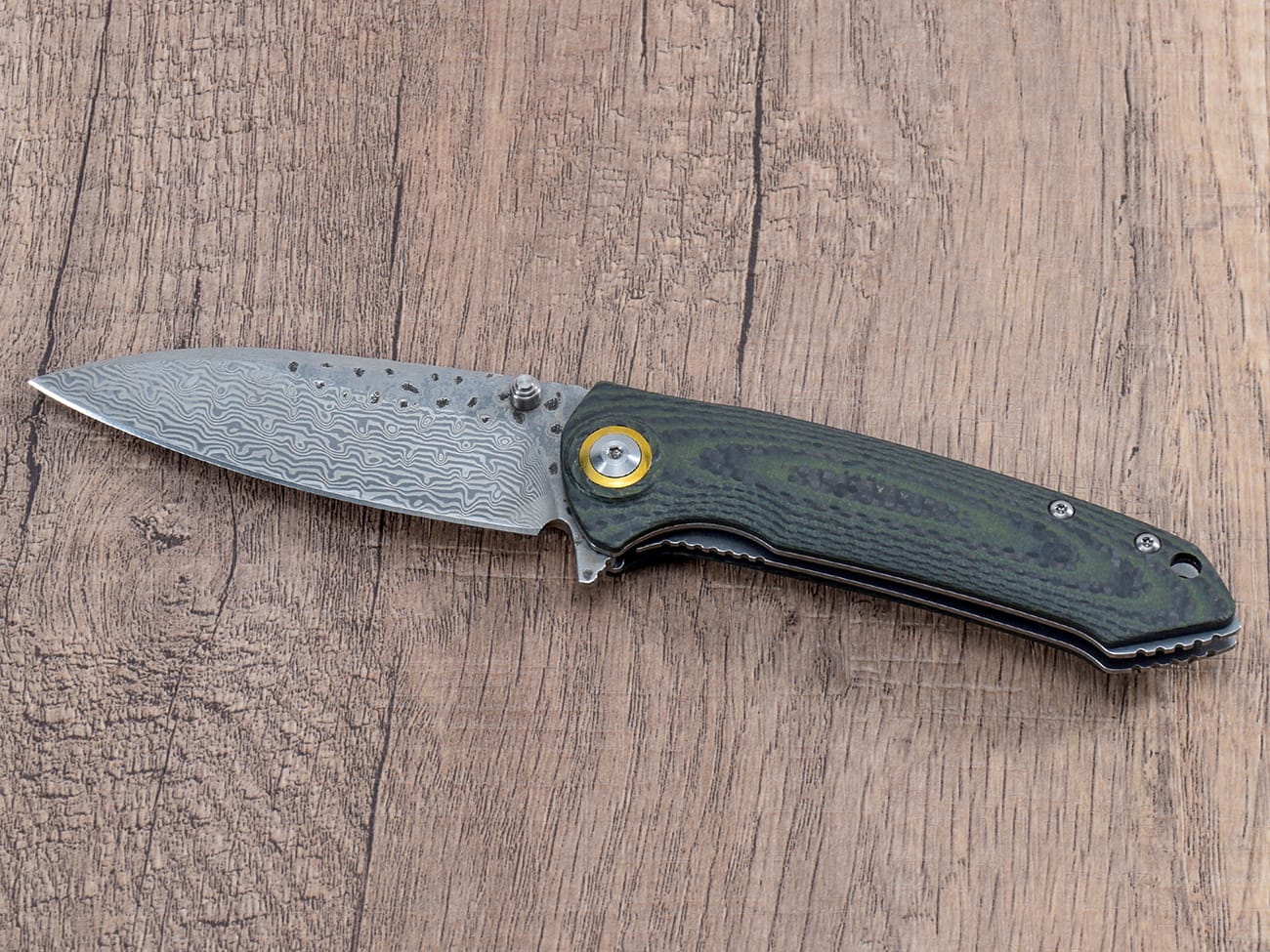
Damascus steel pocket knife with G10 handle and pocket clip
Common Misconceptions About WD-40 and Knives
Many knife enthusiasts have misconceptions about using WD-40 on their blades. While it’s true that WD-40 can help with rust removal and basic maintenance, it’s not a dedicated knife lubricant. The product was originally designed as a water displacement formula (hence the “WD” in its name), making it more suitable for temporary use rather than long-term knife care.
Step-by-Step Guide to Using WD-40 on a Rusty Knife
Follow these steps to safely use WD-40 for cleaning your folding knife:
- Clean the knife with soap and water
- Dry the knife thoroughly
- Apply WD-40 sparingly onto the blade
- Let it sit for a few minutes
- Use a wire brush or steel wool to remove rust
- Wipe clean with a lint-free cloth
- Apply proper knife oil for long-term protection
When Should You Avoid Using WD-40?
There are several situations where using WD-40 on your EDC knife isn’t recommended:
- On knives used for food prep
- When better knife-specific lubricants are available
- If the knife manufacturer advises against it
- On valuable collectible knives
Better Alternatives to WD-40 for Knife Maintenance
Consider these alternatives for proper knife care:
- Mineral oil (food-safe option)
- Dedicated knife oils with PTFE
- Specialized knife lubricants
- Food-grade lubricants for kitchen knives
How to Properly Clean Your Knife After Using WD-40
After using WD-40, it’s crucial to:
- Wipe off excess product
- Clean thoroughly with soap and water
- Dry completely
- Apply appropriate knife oil
- Test the action around the pivot
Long-term Effects of WD-40 on Knife Materials
Regular WD-40 use can affect different knife materials:
- Metal surfaces may need more frequent cleaning
- Some handle materials might degrade
- Pivot points may collect grime
- Protective coatings might be compromised
Professional Tips for Knife Maintenance
Experienced knife makers and collectors recommend:
- Regular cleaning with appropriate products
- Proper storage in dry conditions
- Using dedicated knife lubricants
- Following the manufacturer’s maintenance guidelines
Summary: Best Practices for Using WD-40 on Knives
Key takeaways to remember:
- WD-40 is best for temporary rust removal
- Always clean thoroughly after use
- Consider knife-specific alternatives
- Keep knives dry and well-maintained
- Use food-safe products for kitchen knives
- Regular maintenance prevents serious issues
- Follow manufacturer guidelines
Remember to check out our selection of various pocket knives for high-quality options that will serve you well with proper maintenance.